
Knee pain!!! One of the commonest and under-treated symptom amongst the Indians which has long term ramifications (we will explore them in subsequent posts). It is found more prevalent in women especially after the age of 30 years. The knee pain in young and the middle aged are seen to be two different entities based on the the primary joint involved, viz; the knee cap joint (patellofemoral : knee cap in front & the thigh bone below) is seen as the culprit for pain in young and the main joint (tibio-femoral) between the thigh & leg bones in the middle-aged and above. 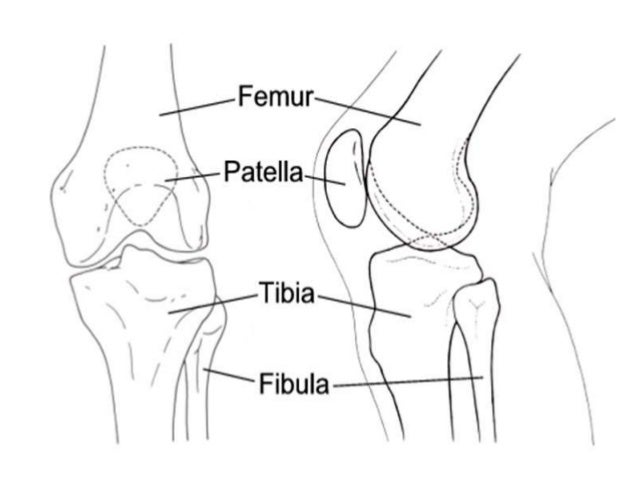
They are seen to be exclusively independent which I feel is not the case. I am convinced that the patellofemoral pain is the beginning of the entire journey of knee related problems culminating in the potential progressive deterioration and producing corresponding handicap and disability. Thus, the knee pain in young gradually extends to the knee pain in middle-aged & elderly and it can take anywhere between 10-30 years for it to reach a stage necessitating surgery, depending on the weight, age, and if it is due to diagnosed Rheumatoid Arthritis (RA), a little earlier as well.
They are seen to be exclusively independent which I feel is not the case. I am convinced that the patellofemoral pain is the beginning of the entire journey of knee related problems culminating in the potential progressive deterioration and producing corresponding handicap and disability. Thus, the knee pain in young gradually extends to the knee pain in middle-aged & elderly and it can take anywhere between 10-30 years for it to reach a stage necessitating surgery, depending on the weight, age, and if it is due to diagnosed Rheumatoid Arthritis (RA), a little earlier as well.
The incidence and prevalence is increasing by the day and even younger people (male and female alike) are experiencing this problem. There are various theories subscribed to this increased frequency which in my opinion are at best associated factors and not causative. Why associated?
- Weight: All patients with knee pain are not necessarily over-weight and all obese/overweight patients don't experience knee related symptoms of the same severity.
- Vitamin D3 : It is seen that patients with knee pain may have Vit. D3 deficiency but all people with Vitamin D3 deficiency don't have knee pain.
- Aging: Very subjective as all people of the same age, sex, weight, height don't experience the same type of problems
- Rheumatism: It is usually inferred that if more than one joint is paining and if the ESR (blood test to identify chronic problem) is high beyond its range, then the patient is labelled to be suffering from rheumatism (sero-negative RA), even in the scenario where the rheumatoid specific tests are negative.
- Weakening of bones: just because the patient is a women, attributing all unexplained pains to weak bones is an unacceptable excuse.
Are the above mentioned factors irrelevant? NO. I am not sure about the others but weight and age have an influence on the progress of the problem. The more the weight and the age at onset of the problem, more the chances of progression.
So, what is the cause for knee pain? How does it progress? Is it only about the Most importantly how to we treat? Role of taping? We will dwell into the various aspects in the forthcoming posts.

No comments:
Post a Comment